If you’ve ever looked into industrial piping for a construction, commercial, or manufacturing project, you’ve likely come across the terms pipe welding and pipe fabrication. They’re often used together — and sometimes even interchangeably — but they’re not the same thing. Understanding the difference can help you make smarter decisions, communicate more clearly with contractors, and ensure your project gets the right service the first time.
In this guide, we’ll break down exactly what each process involves, how they differ, when you need one versus the other, and why both are essential to modern piping systems. Whether you’re a contractor, plant manager, or property owner planning a major installation, this article will give you the clarity you need.
What Is Pipe Welding?
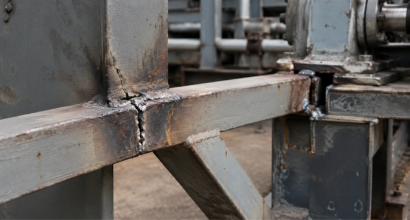
Pipe welding is the process of permanently joining two or more sections of pipe together using intense heat to fuse the metal at the joint. A certified pipe welder applies a specific welding technique — such as TIG (Tungsten Inert Gas), MIG (Metal Inert Gas), or Stick welding — depending on the pipe material, wall thickness, and project requirements.
Pipe welding is a specialized trade. It demands a high degree of skill, precision, and often industry-specific certifications — particularly when working with high-pressure systems, stainless steel, or x-ray-quality welds. A small flaw in a weld can compromise the integrity of an entire pipeline, which is why only experienced and certified welders should handle structural or industrial pipe joints.
What Is Pipe Welding?
Pipe welding is the process of permanently joining two or more sections of pipe together using intense heat to fuse the metal at the joint. A certified pipe welder applies a specific welding technique — such as TIG (Tungsten Inert Gas), MIG (Metal Inert Gas), or Stick welding — depending on the pipe material, wall thickness, and project requirements.
Pipe welding is a specialized trade. It demands a high degree of skill, precision, and often industry-specific certifications — particularly when working with high-pressure systems, stainless steel, or x-ray-quality welds. A small flaw in a weld can compromise the integrity of an entire pipeline, which is why only experienced and certified welders should handle structural or industrial pipe joints.
Common Applications of Pipe Welding
- Joining pipe sections for gas, water, and oil distribution systems
- Connecting pipe assemblies during on-site construction or installation
- Repairing existing pipeline joints that have corroded, cracked, or failed
- High-pressure piping connections in industrial and process environments
- Boiler and pressure vessel piping connections
At Khalsa Welding Toronto, our certified pipe welders handle everything from stainless steel TIG and stick x-ray welding to mild steel MIG welding — both in our shop and on-site at your location.
What Is Pipe Fabrication?
Pipe fabrication is the broader process of cutting, bending, threading, fitting, and assembling pipe components into a complete piping system or sub-assembly — before it’s ever installed. Think of it as building the sections, spools, and modules of a piping system in a controlled shop environment, then shipping them to the job site ready to install.
Fabrication involves much more than welding. It includes reading and interpreting engineering drawings and isometrics, selecting the correct pipe materials (carbon steel, stainless steel, aluminum, alloys), cutting and shaping pipe to precise specifications, fitting components like elbows, flanges, tees, and reducers, and conducting quality testing before delivery.
Common Applications of Pipe Fabrication
- Pre-built piping spools and assemblies for industrial plants
- Custom pipe modules for oil and gas facilities
- Process piping systems for manufacturing and chemical plants
- Modular skid systems that integrate piping, valves, and instrumentation
- High-pressure and specialty alloy piping for unique process requirements
Our team at Khalsa Welding Toronto specializes in prefabricated piping, modules, and skids — delivering fully assembled, tested units ready for rapid installation, which dramatically reduces on-site labour time and costs.
Pipe Welding vs Pipe Fabrication: Side-by-Side Comparison
Here’s a quick reference table to help you visualize the key differences at a glance:
| Aspect | Pipe Welding | Pipe Fabrication |
| Definition | Joining pipe sections using heat and filler metal | Building complete pipe assemblies from raw components |
| Scope | One specific joining process | End-to-end assembly process (includes welding) |
| Location | On-site or in-shop | Primarily in a fabrication shop |
| Skills Required | Certified welder with pipe welding qualifications | Team of fitters, welders, QA inspectors, and engineers |
| Output | A joint or series of joints | Complete, ready-to-install piping spool or system |
| Quality Control | Individual weld inspection | Full dimensional, weld, and pressure testing of assemblies |
| Common Materials | Stainless steel, carbon steel, aluminum | Stainless steel, carbon steel, aluminum, specialty alloys |
| Typical Projects | Repairs, connections, on-site installations | Industrial plants, process systems, modular builds |
How They Work Together
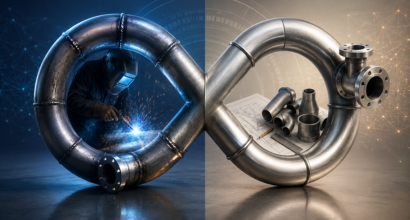
Here’s an important point that often gets overlooked: pipe welding and pipe fabrication aren’t competing services — they work together. Welding is one of the most critical steps within the fabrication process. A fabricated pipe spool, for example, requires precision cutting, fitting, and then welding to join all the components into a single unit.
When you hire a full-service pipe fabricator like Khalsa Welding Toronto, you get both — a team that handles the complete scope from design to delivery, including certified welding at every joint. This integrated approach results in higher quality, faster timelines, and fewer headaches on the job site.
When Do You Need Pipe Welding vs Pipe Fabrication?
Choose Pipe Welding When You Need To:
- Repair a broken or leaking pipe joint on an existing system
- Connect newly delivered pipe sections during installation
- Perform emergency on-site welding repairs for industrial machinery
- Make field modifications to an installed piping system
Choose Pipe Fabrication When You Need To:
- Build a new piping system from the ground up
- Pre-assemble complex piping layouts before bringing them to the site
- Create standardized, repeatable pipe spools for large-scale projects
- Integrate piping with valves, instruments, and process equipment into a skid or module
Many large industrial projects — such as water treatment plants, commercial process facilities, and high-pressure systems — require both services at different stages. You might have pipe spools fabricated off-site and then require certified on-site welding to connect and commission the system. Our team at Khalsa Welding Toronto is equipped to handle both phases seamlessly.
If your project involves complex industrial process piping, it’s especially important to work with a contractor who understands not just how to weld, but how to fabricate and deliver complete, tested assemblies built to your specifications.
Materials Commonly Used in Both Services
Both pipe welding and pipe fabrication can be applied across a wide range of metals. The material selection depends on the application — what fluids or gases the pipe will carry, the operating pressures and temperatures, and the environmental conditions the system will face.
- Stainless Steel — Widely used for food-grade, chemical, and high-corrosion environments. Requires precise TIG welding and careful heat management to preserve its properties.
- Carbon Steel — A cost-effective choice for many industrial and structural applications. Different carbon grades require different welding approaches.
- Aluminum — Used in lightweight applications and certain process industries. Requires specialized MIG and TIG welding techniques.
- Specialty Alloys — Duplex stainless, chrome-moly, Inconel, and others are used in demanding environments like petrochemical plants and power generation facilities.
At Khalsa Welding Toronto, we work across all of these materials as part of our full-service custom metal fabrication offering — ensuring every project meets both the technical and safety standards required.
Quality and Safety: The Non-Negotiables
Whether you’re talking about pipe welding or pipe fabrication, quality control is everything. A poorly welded joint in a high-pressure gas line or a chemical process system isn’t just a maintenance problem — it’s a safety hazard. This is why reputable contractors like Khalsa Welding Toronto subject every project to rigorous inspection and testing.
For fabrication projects, this includes dimensional inspection to verify all measurements match design drawings, visual and non-destructive weld testing, hydrostatic or pressure testing where required, and full documentation and traceability for compliance. Our work on pressure vessels and high-pressure systems is always performed with this level of diligence — because cutting corners in this field simply isn’t an option.
If you need scheduled or emergency maintenance and repair services for your existing piping or welded components, our team is also available to respond quickly and get your systems back up and running safely.
Need Pipe Welding or Fabrication in Toronto?
Khalsa Welding Toronto provides certified pipe welding, custom fabrication, and complete piping solutions across the Greater Toronto Area. Get in touch with our team today for a free quote.
Why Work With a Full-Service Pipe Specialist?
Not every welding company has the capabilities, certifications, or equipment to handle full-scale pipe fabrication. When you’re dealing with industrial systems, process plants, or high-pressure piping, you need a team that can do more than just weld — you need a partner who understands the full lifecycle of a piping project.
Khalsa Welding Toronto has been serving clients across Toronto, Mississauga, Brampton, Etobicoke, and the wider GTA for over a decade. Our full range of welding and fabrication services means you don’t need multiple contractors for a single project. From engineering support and takeoff planning through to fabrication, quality testing, and on-site installation, we handle everything under one roof.
Our mechanical piping services and gas piping installation services are just two examples of the specialized, safety-critical work our team completes on a regular basis — always to code, always with precision.
Frequently Asked Questions
Is pipe welding the same as pipe fabrication?
No, they are related but not the same. Pipe welding is one specific process — joining pipe sections using heat and filler metal. Pipe fabrication is a broader process that includes cutting, fitting, assembling, and welding pipe components into a complete system or sub-assembly. Welding is an important step within fabrication, but fabrication covers much more than just welding.
What qualifications does a pipe welder need?
Pipe welders typically need trade certifications specific to the welding processes they use (TIG, MIG, Stick) and the materials they work with. For high-pressure and x-ray-quality pipe welding, welders must pass rigorous qualification tests to industry standards such as ASME, AWS, or CSA, depending on the jurisdiction and application. At Khalsa Welding Toronto, our welders are certified and experienced in pressure-rated systems.
What is a pipe spool in fabrication?
A pipe spool is a pre-fabricated segment of a piping system — typically including straight pipe sections, elbows, flanges, and other fittings — that has been assembled and welded in a fabrication shop. Spools are built to exact engineering dimensions so they can be transported to the job site and connected efficiently with minimal on-site welding. This approach saves time, reduces costs, and improves overall quality.
Can I get both pipe welding and fabrication from the same company?
Yes — and for most large projects, it’s highly recommended. A full-service contractor like Khalsa Welding Toronto can manage the entire scope, from designing and fabricating pipe assemblies in the shop to performing on-site welding and installation. This integrated approach streamlines communication, ensures consistency, and reduces the risk of errors between handoffs.
What types of piping systems does Khalsa Welding Toronto work on?
Khalsa Welding Toronto works on a wide range of piping systems including industrial process piping, high-pressure piping, gas piping, mechanical piping, boiler and pressure vessel piping, and modular skid systems. We serve clients across Toronto, Mississauga, Brampton, and the Greater Toronto Area.
What materials can be used for pipe welding and fabrication?
The most common materials include stainless steel, carbon steel, and aluminum. However, specialty and high-performance alloys — such as duplex stainless, chrome-moly, and nickel alloys — are also used in demanding industrial environments. The right material depends on the operating temperature, pressure, and the nature of the fluid or gas being transported through the pipe system.